A Beginner’s Guide to Color, Style, and Technique
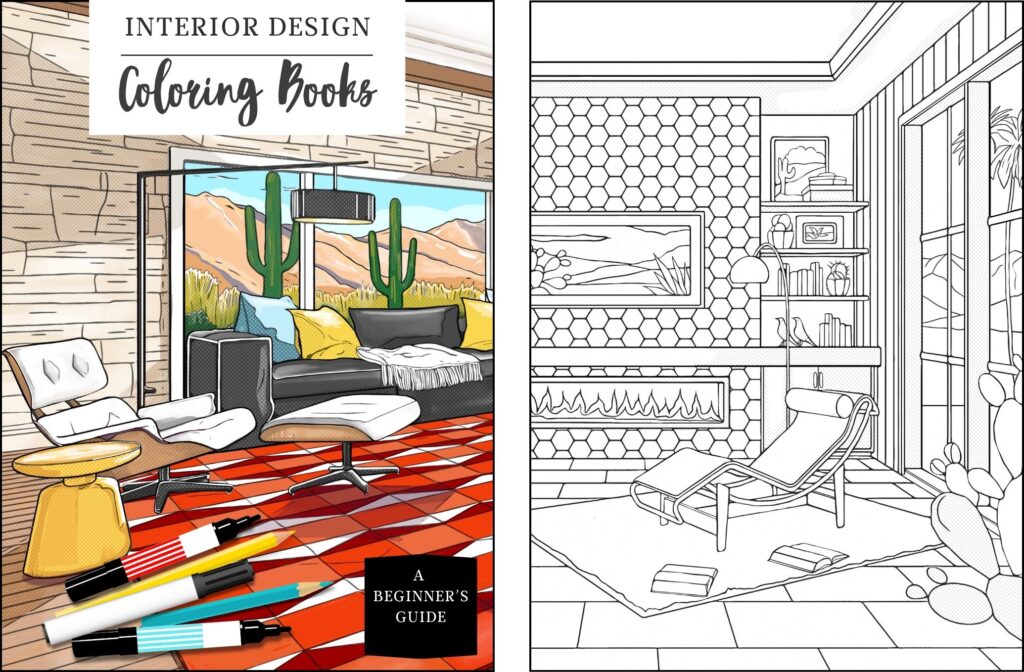
Unleash your inner decorator with captivating interior design coloring books! Dive into page after page of beautiful sketch illustrations showcasing diverse home designs.
Explore various room settings, including cozy bedrooms, imaginative children’s rooms, stylish living areas, reflecting a variety of interior design styles like my At Home Tropical Styles Interior Design Coloring Books and start coloring today.
Perfect for detailed coloring. These pages let you engage with inspiring home décor and architectural elements.
Enjoy professional-quality, one-sided interior design coloring pages that reduce bleed-through and are easy to remove and display.
Ideal for your favorite colored pencils, gel pens, or markers. Let your imagination run wild as you experiment with color palettes, test design ideas, and bring interior spaces to life! Find hours of relaxation and de-stress while developing your style.
Interior design coloring books are the perfect creative outlet for anyone who loves unique home designs and different décor styles. Read this article and start coloring today!
Article Outline
- Interior Design Coloring Books
- Types of Home Coloring Books
- Combining Markers and Colored Pencils
- Markers for Coloring Books
- Pencils for Coloring Books
- Digital Coloring Books
- Eleven Tips For Success
- Final Thoughts
1. Interior Design Coloring Books
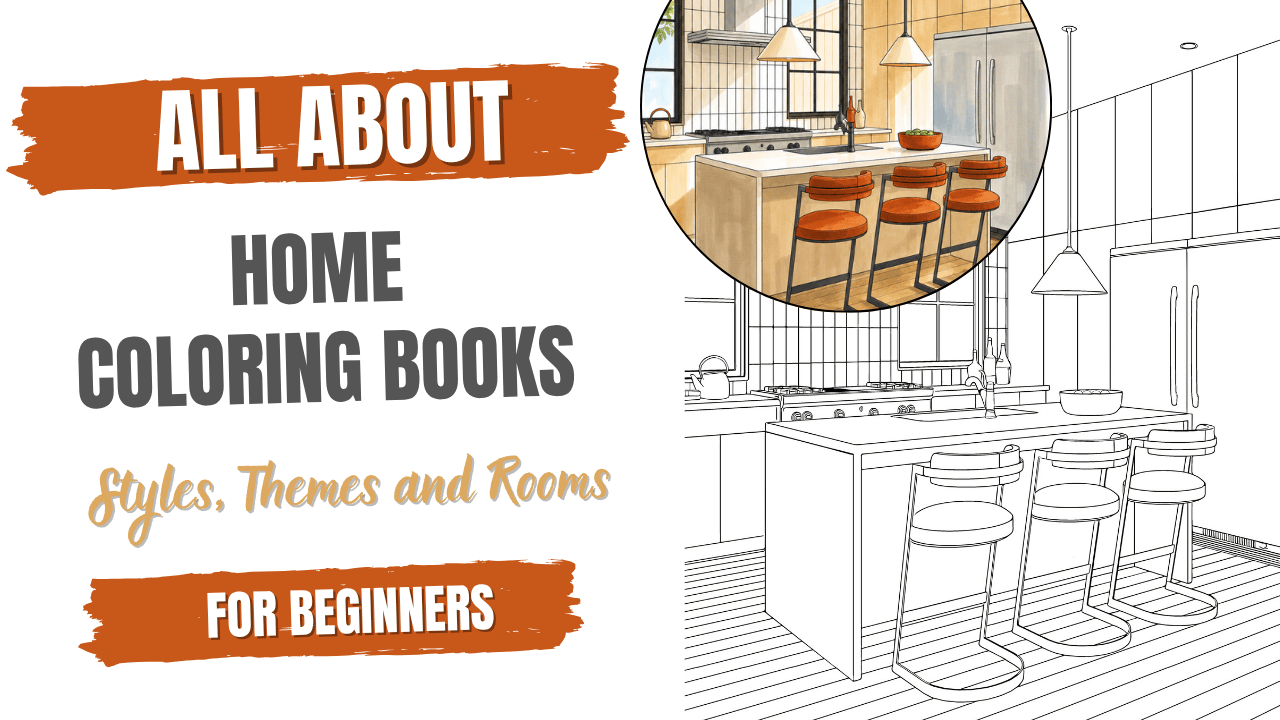
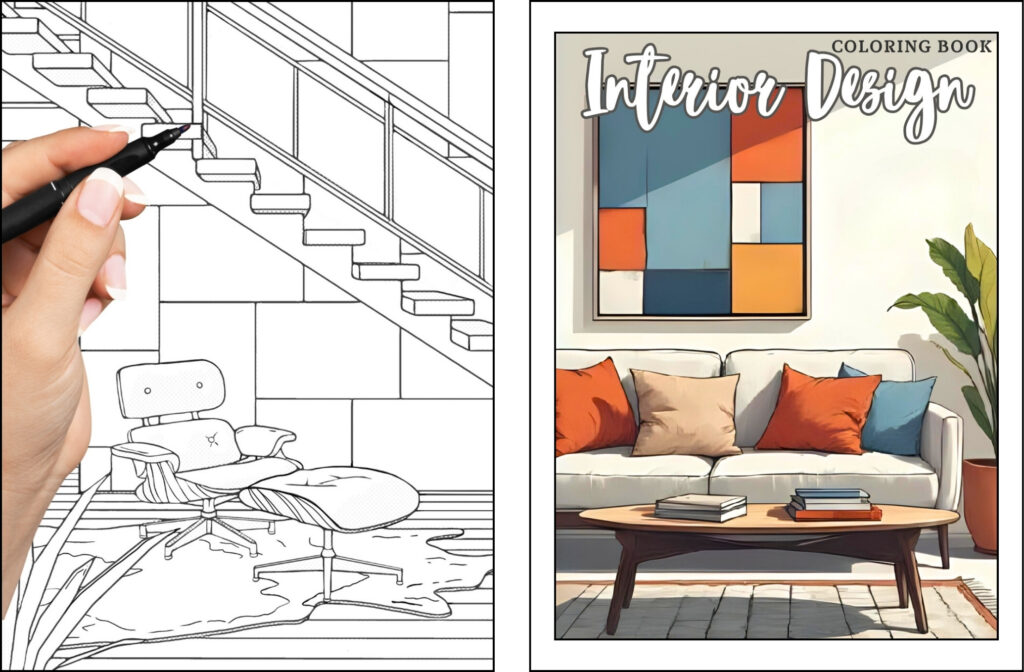
Interior design coloring books offer a unique, low-stakes way for adults and design enthusiasts to explore creativity and experiment with design concepts. Unlike typical coloring books, these feature detailed illustrations of interior spaces, furniture arrangements, architectural elements, and decor, inviting users to enter the designer role.
They provide a fun, relaxing outlet to play with color palettes, patterns, and textures, bringing rooms to life with pencils or markers. They’re also helpful for testing design ideas and exploring a range of materials and color schemes before committing to real-world renovations.
Home décor coloring books range from realistic depictions of various room types and styles (modern, traditional, bohemian, etc.) to imaginative or themed interiors. Beyond the enjoyment, they can spark inspiration for real-life decorating projects, help users understand design principles, and offer a cost-free way to practice interior design skills.
These books bridge the gap between appreciating design and actively engaging in the creative process.
Interior design coloring books are geared toward adults (though older kids and teens may enjoy them too) and focus on interiors, furniture, decor, and architectural details. They provide a hands-on way to explore design ideas without the expense or commitment of actual redecorating.
While some good home design coloring books exist, many are overly simplistic or poorly executed. That’s what inspired me to create my series.
Most coloring book creators rely on AI-generated images. While helpful, these often result in drawings that are out of scale or lack perspective, especially in interior spaces.
I use professional interior design software to ensure accuracy and create realistic 3D renderings, like those seen on home makeover shows. These serve as the base for my hand-drawn illustrations, resulting in coloring pages that are both artistic and true to life.
2. Types of Home Coloring Books
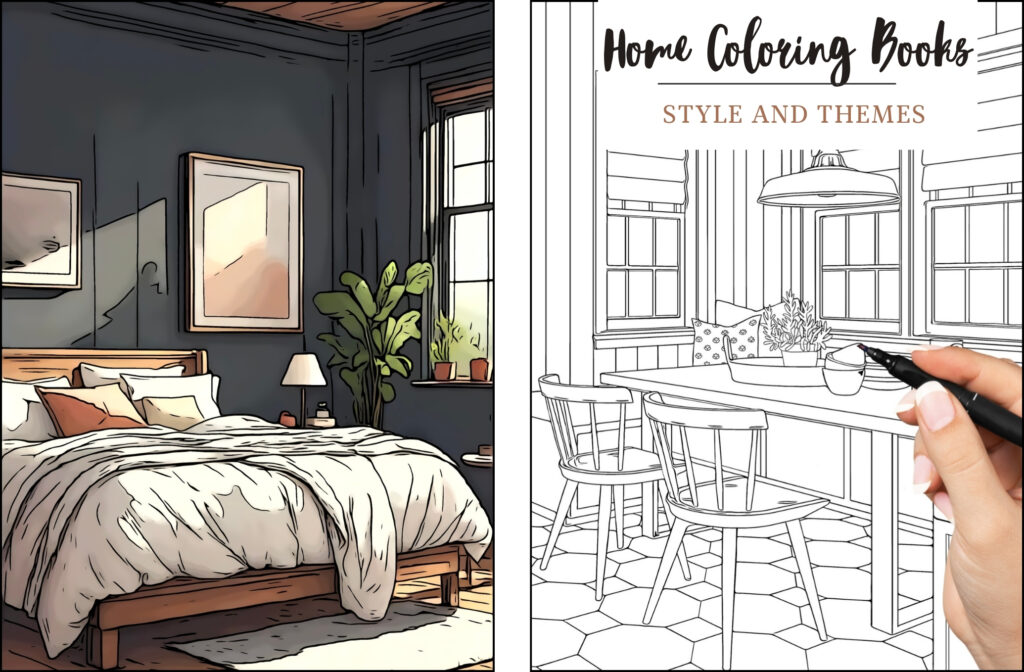
There is a growing variety of home-themed coloring books on the market, often organized by room type, design style, or lifestyle.
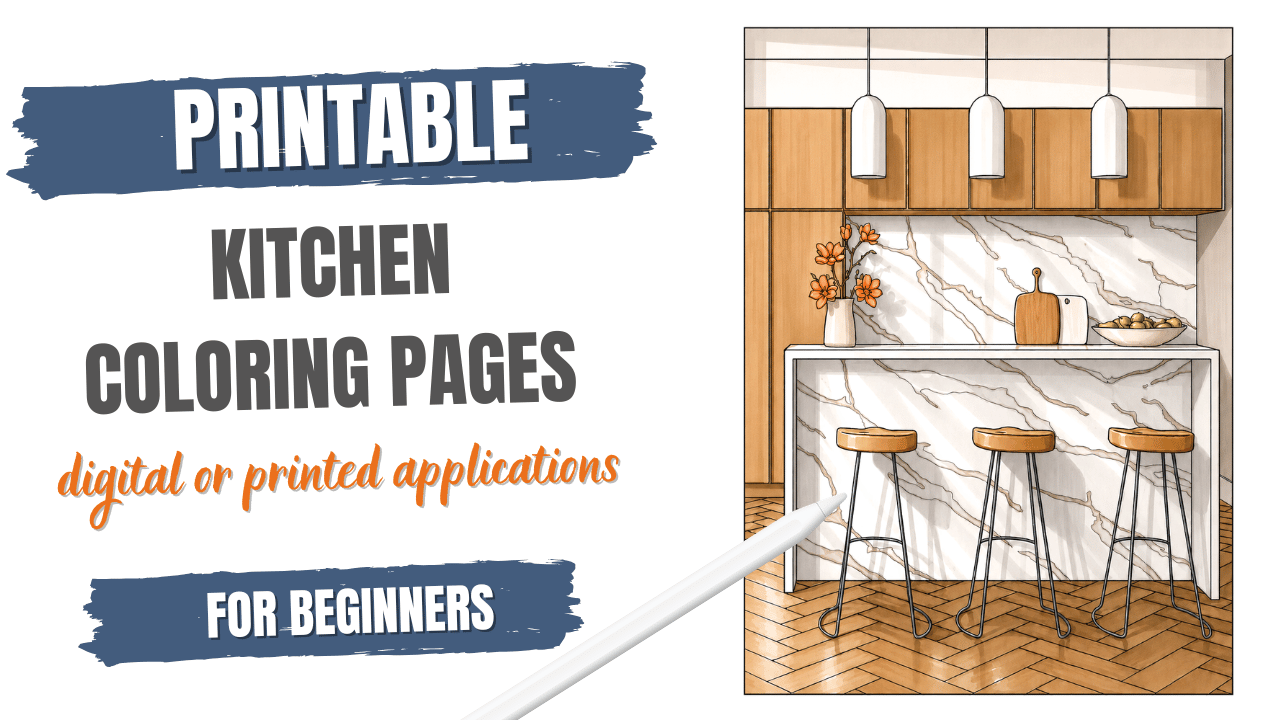
Room-specific books—like Kitchen Coloring Books or Living Room Coloring Books—offer more detailed illustrations and targeted inspiration for those focused on decorating specific home areas.
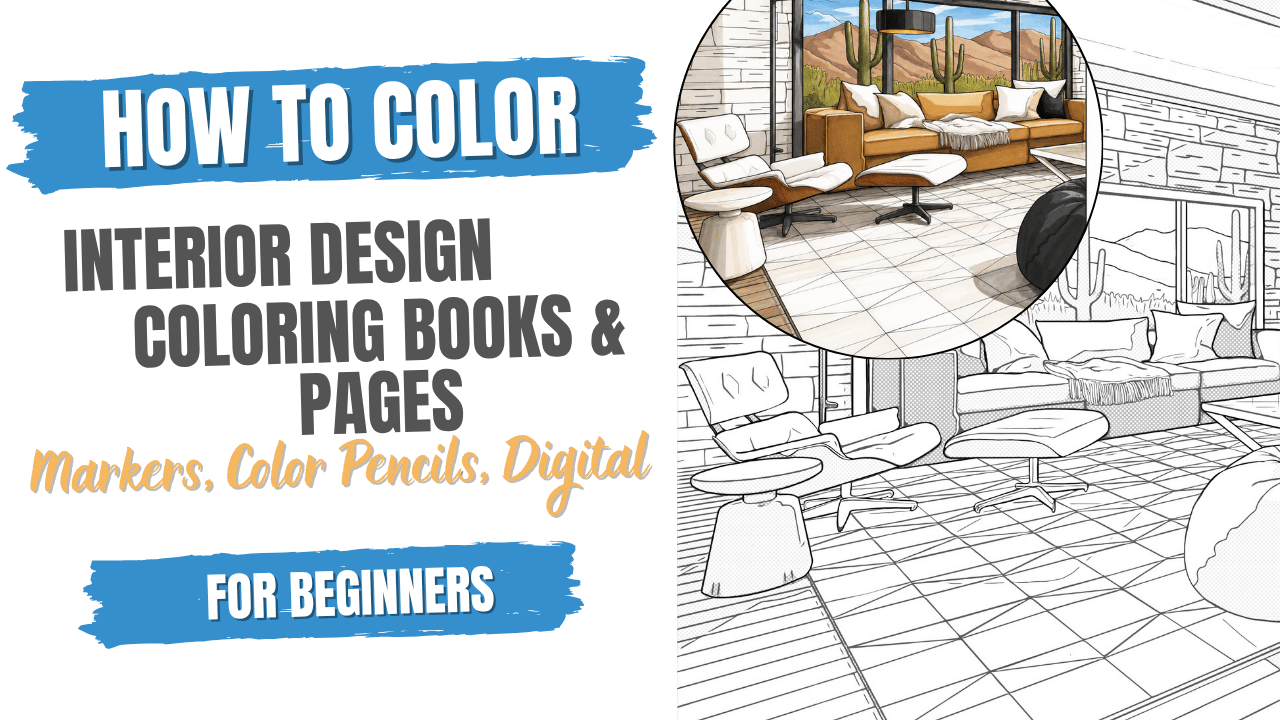
Style-specific books focus on particular aesthetics, such as Mid-Century Modern, Bohemian, or Farmhouse interiors. They cater to readers who love a specific design era or vibe.
Other books highlight dream spaces or whimsical environments, like Cozy Cottages, Luxury Lofts, or Dream Homes, encouraging creativity and escapism.
Some coloring books explore niche design areas even further, such as Interior Design Patterns or Mid-Century Home Decor. This reflects a trend toward more focused and sophisticated offerings in the adult coloring book market.
Today’s books often explore specific styles, historical periods, or design elements rather than broad “interior design” themes. This creates a more personalized and engaging experience for design lovers.
These niche coloring books can also be subtly educational. For example, coloring a Mid-Century Modern room helps users become familiar with the furniture shapes, color palettes, and materials that define the style.
3. Combining Markers and Colored Pencils
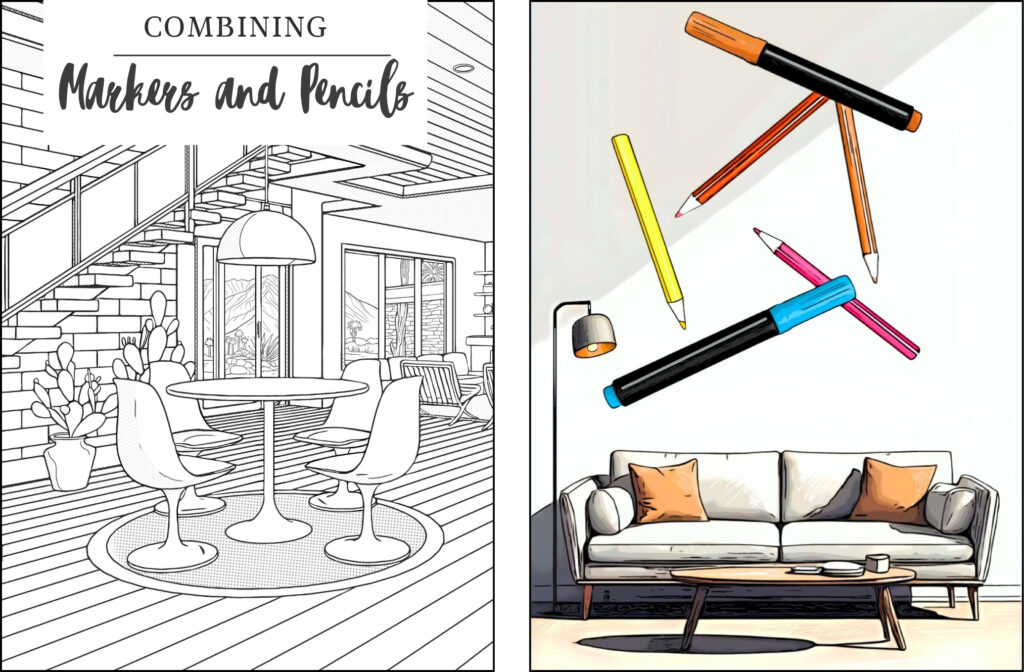
Combining markers and colored pencils is a great technique for coloring interior design books and books in general. This mixed-media approach combines the strengths of both tools, resulting in vibrant, detailed, and nuanced artwork.
Interior design coloring books are usually printed on 50–60 lb paper, similar to standard printer paper or mass-market paperbacks. This thinner paper can be tricky for markers, as both alcohol- and water-based types tend to bleed through. A protective sheet underneath is essential.
Colored pencils are gentler on the page, but require a light touch to avoid denting or tearing the paper. For more flexibility, digital coloring pages can be printed on thicker paper, allowing you to use a broader range of materials without these limitations.
My go-to method for combining markers and colored pencils starts with using markers to lay down a base layer of bold, even color. This is especially helpful for covering large areas like walls, floors, or furniture quickly and smoothly.
Cool gray markers can then be layered to add shading and depth. Brush-tip or chisel-tip markers work best for smooth, streak-free coverage—something colored pencils alone struggle with on large surfaces.
A light marker base can boost color richness and improve blending even if the final piece is mostly pencil.
Colored pencils shine when it comes to detail. Their sharp points are perfect for clean edges, intricate patterns, and varied textures. Techniques like hatching, cross-hatching, and scumbling let you achieve effects from smooth gradients to rough textures.
Pencils are also great for adding subtle shading and highlights. When layered over markers, they intensify color and bring depth to the image. The marker fills in the paper’s tooth, making it easier to blend smoothly with pencil on top.
This combo enhances visual richness and saves time. Markers quickly define the overall value range—light and dark—while pencils refine the details and soften transitions.
4. Markers For Coloring Books
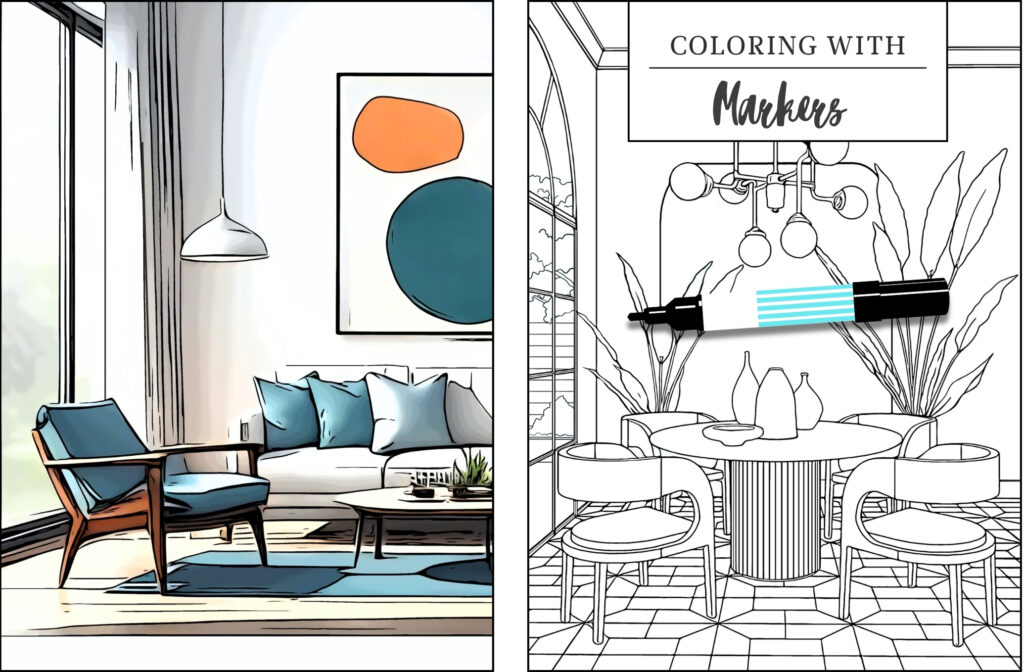
Coloring with markers is a vibrant experience and a fulfilling creative outlet. While beginners might find them trickier than pencils or crayons, the results can be bold and beautiful.
Markers bring interior design drawings to life with rich color and smooth shading. Here’s a quick guide to using alcohol- and water-based markers effectively.
Alcohol-Based Markers
Alcohol-based markers are known for their vivid, saturated colors and smooth blending. Many have dual tips—one broad, one fine—making them versatile for detailed work and large fills. They dry quickly, which helps prevent smudging.However, they do have downsides. Alcohol markers almost always bleed through standard paper, so use thick, marker-friendly paper or place a sheet behind the page. They also have a strong odor and require good ventilation.
These markers are pricier but preferred by professionals for their quality. Popular brands include Copic, Prismacolor, and Chartpak AD Marker. For beginners, a more budget-friendly and large color assortment option is my Design with Cory G Dual Tip Art Marker.
Water-Based Markers
Water-based markers are a gentler option. They’re less likely to bleed through and are usually odorless—great for casual coloring or shared spaces. Many come with dual tips, similar to alcohol-based markers.
The trade-off is color vibrancy. Water-based markers tend to be less intense and can streak on large areas. They’re also more prone to pilling if overused and take longer to dry, increasing the risk of smudging.
While they can produce watercolor-like effects on the right paper, this technique isn’t ideal for standard coloring books. Still, they’re affordable, accessible, and perfect for home décor coloring.
A top pick is Tombow Dual Brush Pens, which are great for everything from lettering to illustration to coloring cozy interiors.
Gel Pens
Gel pens are best for adding details and accents in coloring books. Thanks to their wide range of colors and finishes—metallic, glitter, neon, and pastel—these pens are a favorite for adding flair to coloring pages.
Their fine tips make them ideal for intricate details, small embellishments, and adding opaque highlights to interior design illustrations.
However, they’re not great for filling large areas. Gel pens can be streaky, slow to dry, and prone to smudging. This makes them less efficient for covering big sections smoothly.
For best results, use gel pens strategically—paired with markers or colored pencils—to highlight details and elevate your overall design.
5. Pencils For Coloring Books
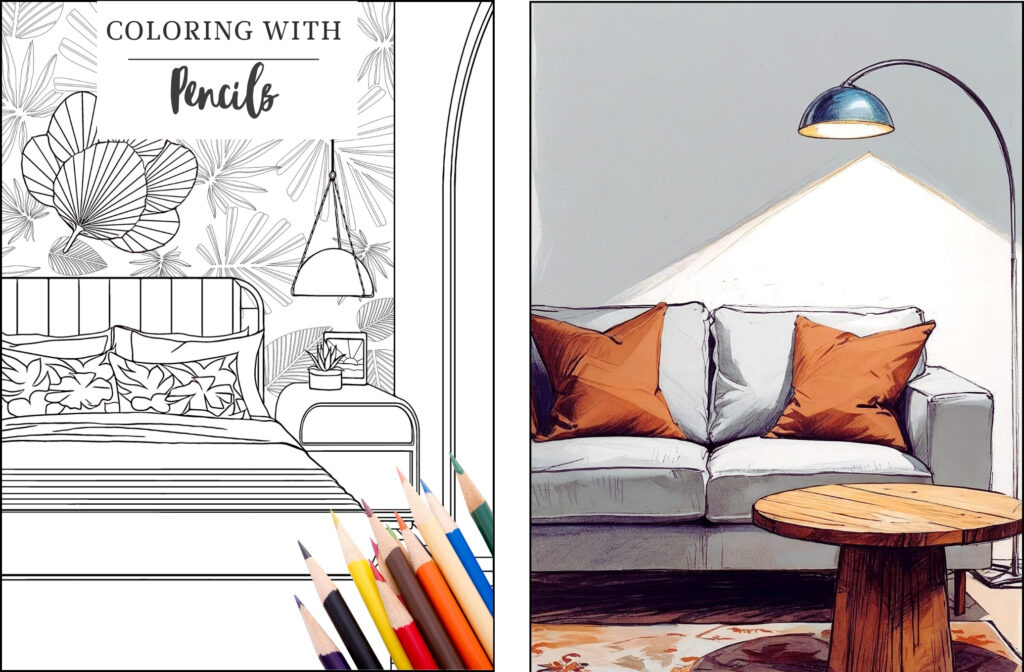
Coloring interior design books with colored pencils is a relaxing and creative way to engage with design concepts. Colored pencils offer control and precision, making them ideal for the intricate details often found in interior design illustrations.
They are a versatile and widely used medium, available in different types—each with its own strengths and drawbacks. Understanding these differences helps you choose the right pencils for your style and needs.
Wax-Based Pencils
Wax-based colored pencils are one of the most common types. They feature soft, creamy cores that blend easily and deliver rich, vibrant color. These add depth, texture, and detail to interior scenes. However, they can smudge, be less precise, and develop a whitish film, known as wax bloom, over time.
Popular wax-based options include Prismacolor Premier, known for excellent blending and color payoff. For beginners or those on a budget, Crayola Colored Pencils offer a solid and affordable alternative.
Oil-Based Pencils
Oil-based colored pencils have a harder core than wax-based ones, which makes them more resistant to smudging and wax bloom. They also hold a sharp point longer and are less likely to break, making them great for fine details and layering.
However, they don’t blend as easily as wax-based pencils and require more pressure to achieve smooth coverage. This can make them less ideal for interior design coloring books, where soft blending and subtle shading are frequently preferred.
Watercolor Pencils
Watercolor pencils can be used dry like regular-colored pencils or blended with water to create soft watercolor effects. However, the water-blending technique requires thicker, watercolor-grade paper, which most coloring books don’t have. Because of this, they’re generally unsuitable for wet use in interior design coloring books.
6. Digital Coloring Books
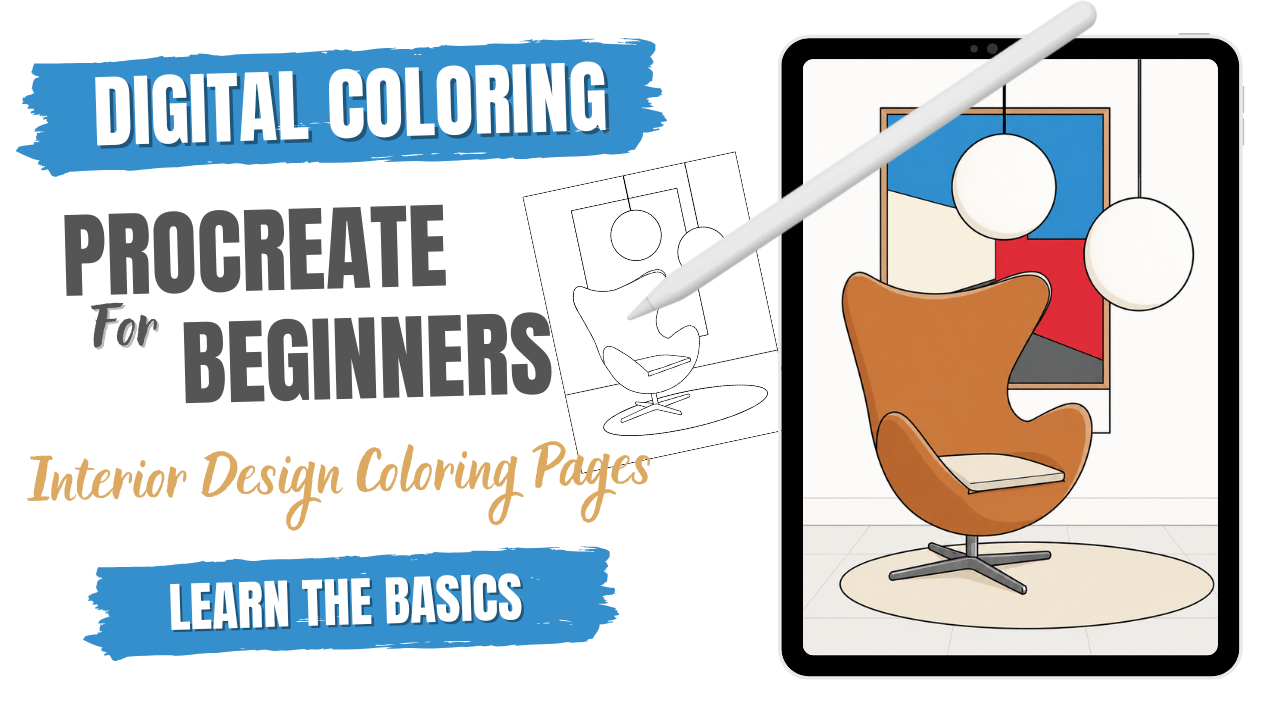
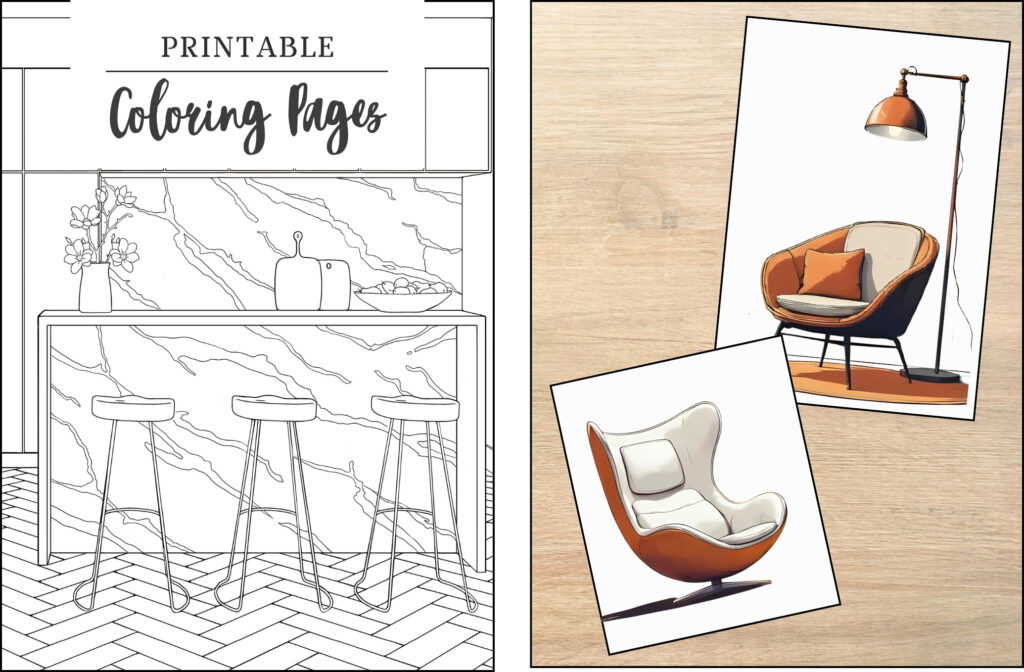
Interior design coloring books come in two formats: printed and digital. Printed books offer the tactile joy of coloring by hand. Digital editions, on the other hand, work with apps like Procreate and come with unique perks.
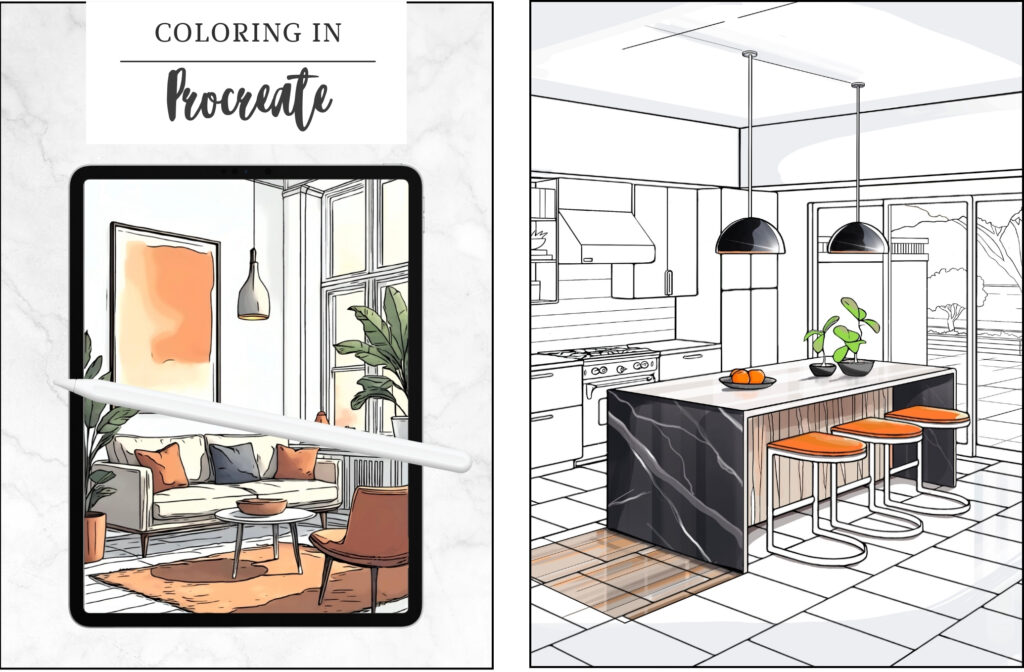
With Procreate, you can try endless color combinations, undo mistakes instantly, and use layers for more detailed designs. No paper, no mess, and no physical supplies needed. This makes digital coloring ideal for those who want a flexible and customizable experience.
Procreate has quickly become a favorite for coloring interior design drawings. It’s easy to use, yet powerful enough for professional-level results. Whether you’re a hobbyist or a designer, Procreate lets you go beyond basic coloring.
You can work with layers, explore different brushes, and simulate materials. It’s easy to test palettes, add shading and highlights, and bring flat line art to life. The result? Vibrant, realistic interior designs—right from your iPad.
Why Use Procreate for Digital Interior Design Drawings
Layers Provide Ultimate Flexibility: This is arguably the most significant advantage. You can keep your original line art on one layer, then add colors, shading, highlights, furniture, and textures on separate layers underneath or above.
This allows for non-destructive editing, meaning you can easily change the wall color without affecting the furniture, experiment with different rug options, or adjust shadows without having to redo the base colors.
Powerful Color Tools: Procreate offers extensive color palettes, easy color picking (including sampling from reference images with the eyedropper), value sliders, and even harmony suggestions. This makes selecting, managing, and applying color schemes intuitive and efficient.
Versatile Brushes for Texture and Effects: Beyond just flat color, Procreate’s vast brush library (including the ability to import or create custom brushes) allows you to simulate the texture of various materials like wood grain, stone, fabric weaves, or concrete.
This adds realism to your renderings.
Blending Modes for Realism: Using blending modes on different layers (like ‘Multiply’ for shadows or ‘Add’/’Screen’ for highlights and light sources) allows you to create convincing lighting effects and add depth far more easily than with traditional media alone.
Precision and Detail: The ability to zoom in deeply enables the precise coloring of small details, patterns, and accessories commonly found in interior design illustrations. Tools like QuickShape and Perspective Guides also aid in creating clean lines and accurate spatial representations.
Ease of Experimentation & Correction: Want to try a different color sofa? Duplicate the layer and change the color. Made a mistake? The undo gesture is instant. This freedom to experiment without consequence encourages creativity and helps refine design ideas quickly.
Portability and Convenience: Being on the iPad means you can work on your designs anywhere, anytime inspiration strikes.
7. Eleven Tips For Success
1. Color Schemes: Plan your color scheme before you start coloring. Consider using color theory principles (monochromatic, analogous, complementary) to create a harmonious palette.
2. Light Source: Decide on a consistent light source for the scene to create realistic shading. Leave white on the page for highlights and use cool gray markers for shading.
3. Materials: Think about the materials in the illustration (wood, fabric, metal, glass) and try to represent their textures through your coloring techniques.
4. Depth and Perspective: Use shading and value to create a sense of depth and perspective in the room. Distant objects should be lighter and less detailed.
5. Focal Points: Use brighter colors, higher contrast, or more detailed rendering to draw attention to the room’s focal points.
6. Do not Be Afraid to Experiment: Try different techniques and color combinations. Coloring books is a fantastic way to practice and develop your skills without any pressure.
7. Combine Mediums: Apply markers first, try and finish with colored pencils.
8. Start Light: It is always easier to add more color than to take it away.
9. Protect Your Work: Place a sheet of paper under the coloring page to prevent indentations on the following pages.
10. Take Breaks: Coloring can tire the eyes and hands. Take breaks to avoid strain.
11. Enjoy the Process! Coloring should be relaxing and enjoyable. Do not worry about making mistakes; it is all part of the learning process.
8. Final Thoughts
Home-themed coloring books have grown in popularity, and interior design coloring books are a fun, creative way to explore design. They offer a low-pressure space to experiment with color, pattern, and style.
These books can inspire, relax, and even teach. They’re perfect for anyone who loves interiors—from beginners to seasoned pros seeking a creative break.
Whether you prefer the hands-on experience of a printed coloring book or the limitless creative possibilities of a digital version, interior design coloring books offer a fun and inspiring way to explore design concepts.
Both formats allow you to play with color, layout, and style in a low-pressure environment, making them perfect for beginners and professionals alike.
Whether you’re sketching with colored pencils or experimenting with digital brushes in Procreate, these books are a great tool for sparking creativity and bringing your interior design ideas to life.